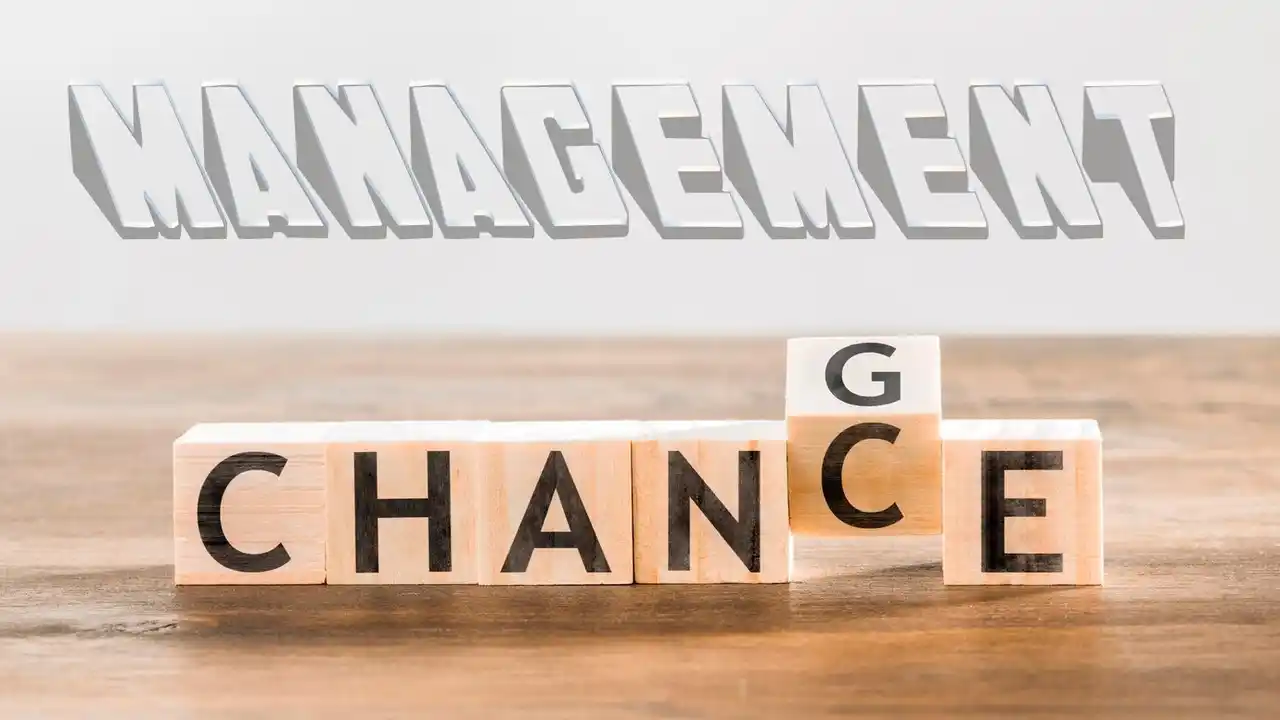
The process of facilitating and monitoring organizational changes is referred to as “change management.” The modifications may arise from external influences, internal company operations, employee-initiated shifts, or more significant incidents. As a consequence, change management models can be classified as a form of executive communication that provides concepts, processes, and strategies to facilitate individuals’ transitions and ensure the seamless execution of changes. Before I continue my string of David Bowie analogies, I would like to extend my sincerest apologies. In this article, we will discuss about change management models in brief with examples for your better understanding.
Change management pertains to the measures implemented to ensure employee satisfaction with the ensuing transformation. The phrase “change management models” denotes a collection of principles and theories that are implemented to direct the process of organizational change. There exists a formula that accounts for a multitude of variables and can be employed in diverse manners to direct or synchronize this change management. These tools are intended to equip you with the resources necessary to effect change and maintain your progress. In addition, they offer support to employees, managers, and other stakeholders in their efforts to adopt and implement the change. Our objective is to ensure that all individuals possess the capability to effect change. Read this comprehensive guide for more information on importance of change management issue.
Change Management Models
When undertaking extensive internal operations overhauls, organizations can derive advantages from the well-established methodology of change management. To provide context for the term “change management,” CIOPages.com presents the subsequent definition and summary. Harvard Business Review states that one of the stated objectives of change management is to “deal with a new, more challenging market by altering the way business is conducted.” Clearly, accomplishing all predetermined objectives and executing all intended adjustments stands as a paramount concern. Change management enables modifications to be implemented in an organization’s structure, operations, tools, and personnel accountable for task execution. Here is an overview of change management models with a detailed explanation for your convenience.
Adkar Model of Change
On the basis of best practices, a change methodology called the ADKAR methodology provides a “helpful framework for discussing change.” The objective is to incorporate change into the project management procedures of the organization while concurrently tackling the factors that contribute to resistant attitudes towards change. In order to optimize the training experience for their personnel, change managers may employ the ASK model to identify ineffectual components of the process. While its principal application lies in business objectives, the ADKAR model can also serve as a potent instrument to facilitate employees’ quicker adjustment to change.
In contrast to alternative change management approaches, ANKAR distinguishes itself through its prioritization of individual development over systemic overhaul. Whenever an employee experiences a transformation, the organization will adapt to accommodate their requirements. This is the fundamental notion that underpins the present concept. Individuals must be conscious, desire change, be aware of what needs to change, possess the capacity to change, and then receive reinforcement for their efforts. The model’s designation references the ongoing operations. The convergence of these components has the potential to generate enduring transformations that benefit both the individual and the organization.
Mckinsey’s 7-s Model
This is a change management strategy that is more comprehensive than others. Despite this, it is an excellent method for implementing changes that impact personnel across all organizational tiers. The purpose of analyzing the seven components of this model is to identify their weaknesses in order to reinforce them. These seven elements comprise the McKinsey 7S change management strategy in its entirety.
The procedures, plan, and framework for the initial three components are established. Upper management finds it easier to identify and modify these, hence they’re termed “hard” elements. Changing an organization’s methods, structure, and strategy is complex. Company culture greatly influences these factors, referred to as “soft.” Flexibility exists in the company’s principles, personnel, abilities, and management approach. Examining the interrelationships and consequences of these seven components is crucial. The McKinsey 7-S model is effective when addressing issues in a corporation. After identifying necessary changes, these seven factors help maintain balance in the business. For instance, if an organization prioritizes family values but lacks certain benefits like paternity leave, this framework can pinpoint potential issues. By asking relevant questions, it aids in implementing appropriate adjustments, such as ensuring the team can support fathers.
Bridge Transition Model
The Bridges Transition Model, similar to the Kubler-Ross change curve, is a change management strategy that places emphasis on individuals. The critical factor for effective change management, according to this theory, is employees’ ability to set aside their prior concerns and concentrate on the future. More precisely, inadequate attention is devoted to the alterations themselves. The Bridges Transition Model is at its most effective when implemented to assist personnel in navigating significant changes. It may come as a surprise to discover that the initial phase of the transition model commences with a tangible conclusion. Numerous employees find this aspect to be the most challenging. Simply stated, they may be resistant to the reforms if your considerations fail to account for their emotions.
Employees in the neutral zone adapt to the new routine and devise alternative methods of task completion during this period. To avoid misunderstandings and irritation, it is vital that you communicate promptly and effectively in the event of a problem. Acceptance concludes the transformation process as the final stage. We inform all staff members about their respective responsibilities and the underlying reasoning for the adjustments. It is essential to emphasize the effectiveness of the modifications so as to demonstrate the tangible outcomes of the staff’s labor.
Lewin’s Change Management Model
Before you can “unfreeze” the present method, you must examine possible improvements. By doing so, everyone will comprehend why change is essential. After that is complete, you will be able to implement the desired changes while continuing to support your staff. After implementing the employee-requested improvements, it will be necessary to “refreeze” the new situation in order to restore stability.
The comparatively short number of phases does not ensure a swift transition. In order for the “change” portion of Lewin’s Model to be efficacious in surmounting resistance and delivering sufficient training, it is customarily recommended to extend its duration. Use this method when implementing changes that will affect the entire team or organization. Does upper management offer substantial assistance?
Nudge Theory
A framework for contemplating prospective methods of persuading individuals to modify their behavior is proposed by the nudge theory. A mindset rather than a set of instructions characterizes it. As opposed to imposing a change on individuals and expecting them to comply, the nudge theory suggests that it is more effective to find methods to make them desire the change voluntarily. This constitutes the foundational concept that underpins the theory. Adopting the employees’ perspective, framing the change’s presentation to highlight its advantages, treating it as a recommendation rather than a mandate, and soliciting input throughout the process can achieve this objective.
Nudge theory suggests that granting employees insight into the significance of change and a voice in its implementation encourages acceptance and embrace of change rather than resistance. It guides employees toward the decisions that management prefers them to make, analogous to how a parent influences the decisions of their offspring. By utilizing this change management framework, one can achieve success in gaining the support of their staff and instilling in them a sense that they participated in the selection and decision-making process regarding the change. When implemented in tandem with another paradigm, nudge theory achieves significantly greater efficacy.
From one perspective, it is possible to motivate individuals to modify their conduct without the use of coercion. Alternatively stated, this is the foundation of the Nudge Theory. Comparable to a guardian who guides a child, the company exploits the cognitive prejudices of its employees to convince them that changes are necessary and then to demonstrate the way forward. By actively engaging each employee in the organization’s process, this approach aims to garner support and agreement for the change.
Kotter’s Theory
Following an examination of more than a hundred organizations undergoing transformation, John Kotter developed the eight-step change model that is presently regarded as his own. This approach rather than centering on the changes per se, emphasizes the individuals undergoing significant organizational transformations. By fostering an environment of trust, openness, and collaboration, Kotter’s methodology for managing change skillfully converts individuals who were initially resistant to adopting it into enthusiastic contributors. This change management strategy gained popularity for clarifying objectives, soliciting input from all stakeholders, and ensuring collaborative execution of modifications.
Kubler-ross Change Curve
This concept thrives in confined spaces, fostering deeper connections and intimate communication. Combining this change management strategy with others is common. These five phases, associated with therapist Elisabeth Kubler-Ross, focus on emotions fluctuating in response to change. Awareness of how change affects emotions aids in their management. While most individuals respond predictably, some may experience phases at varying rates or multiple times. Employees require support, attention, and understanding of their feelings. Supporting them during transitions is crucial, along with maintaining awareness of their emotions. Managers should communicate the positive aspects of changes and be transparent about their perspectives on adaptation. This fosters trust and openness, empowering employees to share their views.
Using the Kubler-Ross Change Curve framework, it illustrates how individuals experience and react emotionally to change. This article discusses how employees’ emotions may influence their motivation and output during the change management process. This transition serves as the primary subject matter of the essay. Productivity decreases as an individual progresses through the stages of the emotion spectrum, which include astonishment, denial, anger, and sadness. Conversely, it experiences a resurgence during the trial and decision stages, and by the conclusion of the integration phase, it has already surpassed its initial value.
PDSA Cycle
Maintaining optimal performance for your organization is possible by implementing the Plan-Do-Study-Act (PDSA) Cycle. Upon the completion of Walter Shewhart’s and W. One of the contributing authors is Thomas Edison. This technique is occasionally referred to as the Deming Cycle or the Deming Wheel. Applying the cycle in one’s favor is an exceptional strategy for achieving progress. It is simple to incorporate any or all of these components into a comprehensive change management strategy. However, if you intend to implement a significant organizational change, you will undoubtedly require a more complex framework. The model conducts a comparison between the predicted and actual events. You can accomplish the desired results an unlimited number of times by iterating these four straightforward procedures.
John m Fisher’s Change Management Model
John M. Fisher’s change management model delineates the sequential course of action that organizations and individuals undertake when implementing a change. Managers have the ability to facilitate employee adaptation to new situations through the monitoring of their progress within the shift cycle. By providing the employee with the appropriate resources, the manager has the potential to assist the employee in advancing to the subsequent level. With the passage of time, the employee will come to embrace the impending change. Fisher’s change model likewise incorporates an individual’s response to and management of change. By adopting the “Personal Transition Curve,” a conceptual framework that elucidates the progression of human development, managers are better able to empathize with their employees during periods of transition.
An employee may experience the following twelve phases of emotion during a transition: apprehension, delight, threat, fear, ire, guilt, melancholy, hostility, acceptance, advancement, denial, and disillusionment. It is conceivable that specific personnel may encounter these circumstances; however, their responses may differ. The fact that it acknowledges the unique qualities of each employee is one of the greatest strengths of the strategy. During periods of transition, this approach is most effective for organizations that possess the personnel and means to conduct one-on-one meetings with every employee.
Satir’s Change Model
While bearing certain resemblances to the Kubler-Ross Change Curve, the Satir Change Model places greater emphasis on the operational efficiency of a given entity. Although initially developed for family therapy, organizations eventually began implementing it for workplace reform. Its reported objective is to assist individuals in more effectively managing and adjusting to change. Central to this concept is the notion that things can only improve, even if it is a gradual one in which they initially deteriorate. This component is vital to the model.
Lamarsh’s Change Management Model
Individuals are more likely to adopt and execute novel methodologies when there is a decrease in risk, according to the LaMarsh change management strategy. In this instance, “people” refers to the individuals who would be most impacted by the proposed alterations. An early dialogue concerning the potential hazards associated with embracing change is imperative during the change management phase. The purpose of the demonstration is to ensure the smooth operation of the entire organization throughout the transition. The LaMarsh strategy places great importance on purposeful adjustments as a means to achieve success. It indicates in which regions of the globe the change will exert its most significant influence. Furthermore, it provides clarity regarding the objectives for all individuals involved in the procedure. by means of the measures that will be executed to ensure their enforceability.
Kaizen Change Management Model
Kaizen, a widely adopted philosophical perspective on change, derives its name from the Japanese term for “positive change.” According to this view, changes ought to be incrementally implemented over a period of time, as opposed to being executed simultaneously. As per the Kaizen method, a handful of significant enhancements are inferior to a multitude of incremental ones.
FAQ
Why is it Necessary to Implement a Change Management Model?
Many benefits are associated with change management. Improved communication, improved decision-making, and decreased stress are a few of the numerous advantages. Additionally, change management may foster a more pleasant work environment and improve morale.
Why is Kotter’s Change Model Superior to Lewin’s?
Positively, in comparison to alternative models, Kotter’s offers a more comprehensive analysis by delineating precise actions that could facilitate the process of change. In contrast, a specific order of steps is necessary, and the entire process may require a considerable amount of time to finalize.
Which Model Allows for Change?
Structural equation modeling (SEM) provides a flexible approach for describing the various forms of potential change. Scholars have the ability to develop a model of change by employing structural equations that effectively captures their fundamental concepts regarding the dynamic interaction of multiple factors over time.
Final Remarks
The prosperity of a business is contingent on its ability to adapt to changing conditions. In the realm of commerce, change is an unavoidable fact. It is suggested that, to increase the probability of success, you choose a change management model that corresponds to your specific requirements, or even utilize a combination of multiple models. A change management model comprises a fundamental principle, an implementation strategy, a content metamodel, and an all-encompassing approach; it facilitates the attainment of transformation objectives and promotes the acceptance and adoption of the new state by individuals. Change management models serve as navigational and implementation guides for significant changes. This article provides an overview of the ten most effective change management models and examines their respective theories and practices. When performing various business tasks, keep in mind that change management models plays an important role in the overall process.