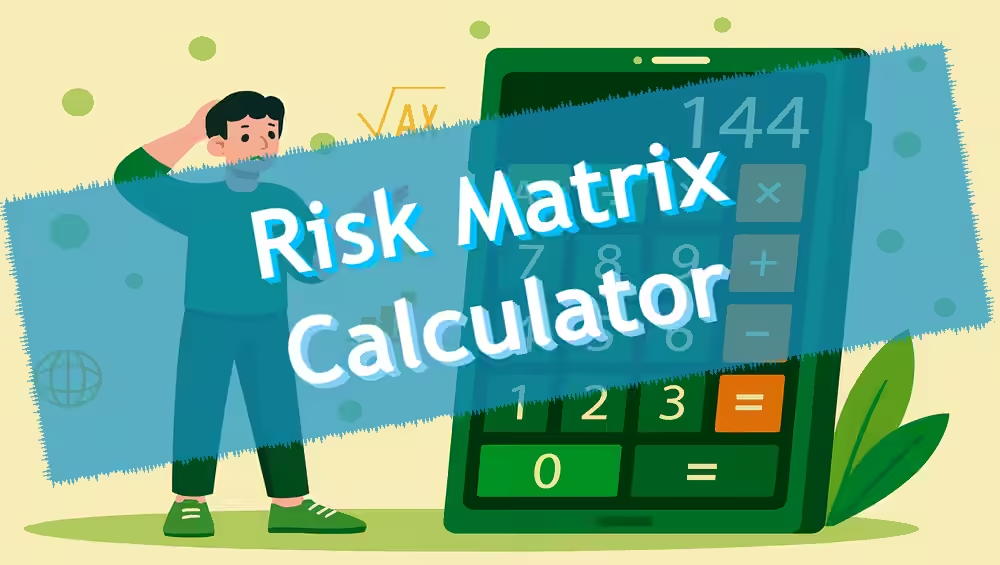
In today’s fast-paced world, organizations and people alike must manage risks. It’s not just a decision. The Risk Matrix Calculator is a powerful tool that may help you locate, assess, and lower risks. If you’re a project manager, a financial expert, or someone organizing a huge event in your life, learning how to use and comprehend a Risk Matrix Calculator can help you avoid pitfalls. This application helps you make smarter decisions and use your resources more wisely by giving you an organized way to look at hazards. The opening gains purpose with the guidance of the risk matrix calculator.
People who work with risk need to know how to use a Risk Matrix Calculator. It gives you a technique to look at hazards in an organized way so that you don’t miss any possible threats. Using this tool to make decisions can help you get better at managing risk and doing your job in general. The Risk Matrix Calculator can be highly useful for both new and experienced risk managers.
Define Risk Matrix
The Risk Matrix is an important tool for managing risk because it lets you see risks and put them in order of how likely they are to happen and how severe they could be if they do. It’s like a grid, with rows displaying how probable a danger is to happen and columns illustrating what could happen if it does. This picture makes it easy to see which hazards are the most critical and need your immediate attention.
You can put dangers on a Risk Matrix to group them by how awful they are. For example, hazards that are very likely to materialize and will have a major effect are normally put in the top right section of the matrix, which suggests that they need to be dealt with very away. In the bottom left corner, you can enter hazards that are not likely to materialize and won’t have a major effect. This shows that they aren’t as vital and might not need to be dealt with right now.
Examples of Risk Matrix Calculator
If you’re a financial adviser and someone asks you to assist them buy stocks, what do you do? You might use a Risk Matrix Calculator to assist you understand the risks of different financial decisions. You may, for instance, find out how likely it is that the economy would go down, the market will be unstable, and rules will change. By putting these risks on a matrix, you can help your customer choose the best financial strategy to reduce losses and increase gains. This application helps you discuss about risks with your clients in a straightforward and organized way, which will help them make smarter decisions.
The Risk Matrix Calculator can help you manage your projects a lot. They often have to deal with a number of risks, like going over budget, being late, and having the project’s scope change. They can uncover these hazards and rate them using a Risk Matrix Calculator. This helps them come up with solutions to lower the risks and plans for what to do if something goes wrong. This proactive approach helps make sure that projects are done on schedule, within budget, and to the quality standards that were set.
How does Risk Matrix Calculator Works?
The Risk Matrix Calculator figures out dangers by carefully weighing how likely they are to happen and how bad they could be if they do. The first step is to make a list of all the hazards that could affect your business, project, or personal aspirations. After you know what the dangers are, you need to work out how probable they are to happen and what could happen if they do. A scale, such low, medium, and high, is typically used to rate this kind of thing for both likelihood and effect.
Next, you put these hazards on the Risk Matrix, which is a grid with the chance of anything happening on the y-axis and the effect on the x-axis. High-likelihood and high-impact risks are very essential and need to be addressed with very away. But dangers that are low in likelihood and low in impact aren’t as critical and may not need to be dealt with right immediately. You can focus your risk management efforts on the biggest concerns because this is how you can see the hazards.
The next phase is to find strategies to minimize the most relevant hazards after developing a map of them. This could entail taking actions to avoid the risks, preparing backup plans, or putting resources aside to deal with them. The Risk Matrix Calculator helps with this by showing you the dangers and how important they are in a transparent way. This makes sure that your attempts to control risks are focused and work.
Benefits of Risk Matrix
The Risk Matrix includes a lot of helpful tools for keeping risks under control. This strategy helps you locate, assess, and rank risks in a systematic fashion, so you don’t miss any possible threats. You may rapidly locate the most serious dangers that need your immediate attention by putting them on a matrix. This helps you make better use of your resources. This rigorous approach helps people make better choices and boosts overall performance.
Enhanced Communication
The Risk Matrix is a great way to show individuals who matter what threats they face. By drawing the hazards on a matrix, you may make a clear and short list of them and how important they are. This illustration helps people understand why risk management is important and get on board with it. It makes sure that everyone is on the same page and working toward the same goals.
Improved Decision-making
The Risk Matrix makes hazards easy to see and understand, which helps you make smarter decisions. It’s easy to see how critical each danger is on a grid, which helps you determine what to do first. This methodical approach reduces uncertainty and makes the overall decision-making process better, which leads to better results.
Enhanced Preparedness
The Risk Matrix helps you uncover and evaluate risks early on in the planning phase so that you can take a more strategic approach to managing them. You can be more prepared for prospective risks by establishing plans to avoid them and backup plans. This makes it less likely that they will happen and lessens their effects if they do. Being ready like way helps you be more resilient and makes sure that your enterprises or initiatives are better able to handle challenges that can come up.
The Ability to Prioritize Risks
The Risk Matrix helps you put risks in order based on how probable they are to happen and how severe they could be if they do. Setting priorities helps you focus your risk management on the most significant threats, making ensuring that your resources are used well. You can develop strategies to minimize the probability of the most critical risks happening and lessen their effects if they do by figuring out which risks are the most essential early on.
More Popular Calculation Tools
Frequently Asked Questions
How Do You Create a Risk Matrix?
Making a Risk Matrix requires a number of stages. First, write down all the things that could go wrong with your business or project. After that, rank each danger on a scale from low to high based on how likely it is to happen and how bad it will be. Put these risks in a matrix. The x-axis should display the effect, and the y-axis should reflect how likely it is to happen. Risks that are very likely to happen and have a big effect are very critical and need to be dealt with immediately away. To manage risks well, you need to find solutions to lower these high-priority risks.
What are the Limitations of a Risk Matrix?
A Risk Matrix has certain drawbacks, like the fact that it oversimplifies hazards, the evaluations are subjective, low-probability events aren’t taken into account enough, it’s static, it can’t manage complicated risks adequately, and it’s easy to get the wrong picture from it. Because of these constraints, it might not be able to complete a full and accurate risk assessment. This could leave you open to risks you didn’t see coming. You might need to utilize other risk assessment tools with the Risk Matrix to get a complete picture of how complicated dangers are and how they affect each other.
How Do You Interpret the Results of a Risk Matrix?
You need to know how probable each danger is to happen and how bad it could be if it does in order to interpret the results of a danger Matrix. Risks that are very likely to happen and have a big effect need to be dealt with very away. To manage risks well, you need to find solutions to lower these high-priority risks. Seeing hazards on a matrix can help you make better decisions, manage resources more wisely, and do better all around. This will help you get better results.
Conclusion
This wrap-up strengthens understanding using the risk matrix calculator. Anyone who manages risks needs to have the Risk Matrix Calculator. This systematic and visible strategy makes it easier to find, evaluate, and rank risks. It also makes sure that no prospective threat is ignored. A Risk Matrix Calculator can help you make smarter decisions, manage your resources more wisely, and do better overall. This application encourages you to take a proactive approach to risk management by helping you come up with ways to minimize risks and backup plans in case something goes wrong.