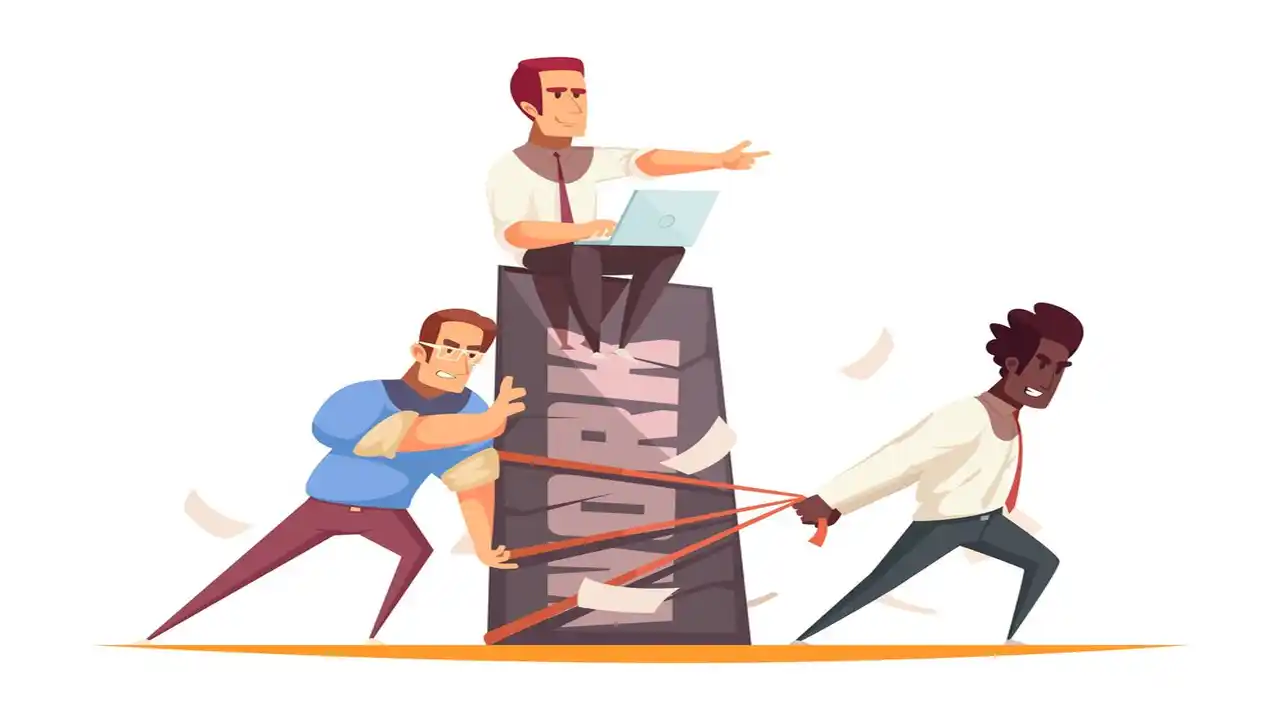
Conflict management encompasses the systematic approach to resolving disputes so as to prioritize favorable outcomes while mitigating the consequences of unfavorable ones. This critical managerial ability necessitates various approaches and strategies, including negotiation, contingent upon the circumstances. Instances of workplace conflict may ensue due to employees possessing contrasting objectives, perspectives, and methodologies regarding specific subjects. A number of individuals may be unwilling to negotiate a resolution to their differences, which may result in arguments and disputes. In this article, we will discuss about process of conflict management in brief with examples for your better understanding.
Both the internal and external environments of an individual can contribute to and worsen the psychological turmoil that arises from possessing ambitions, desires, and expectations that are incompatible or conflicting. Difficulties are inevitable in any society populated by individuals. Interpersonal skills are crucial for resolving disagreements gracefully. Diverse workplace perspectives lead to unique contributions. Conflict emerges from opposing viewpoints on organizational or professional matters. Read more about the conflict management techniques to deepen your comprehension.
Process of Conflict Management
A method for resolving disagreements and conflicts that arise within a group or organization is conflict management. The process commences with identifying the origin of the disagreement, progresses to evaluating the current state of affairs, and culminates in the development of strategies to resolve the conflict in a manner that is advantageous to all parties involved. Possessing conflict management skills is crucial in both professional and personal spheres. Possessing this ability is essential for maintaining strong relationships and communicating effectively. You can use the process of conflict management list below for research and educational purposes.
Potential Opposition
The parties’ opposition or incompatibility could constitute the initial phase of conflict. A multitude of elements, such as the dissemination of information, the contextual environment, and personal interests, have the potential to incite discord at this moment. Given the aforementioned three fundamental differences between Violet and Eric, it is unsurprising that their relationship is tumultuous.
Eric consistently misinterprets Violet’s statements during their daily encounters due to his poor ability to pay attention. Perhaps she instructs the staff to be more cordial with patrons. However, Eric is aware that this demonstrates that he is comfortable sharing information with them regarding both professional and personal affairs. Additional repercussions of Violet’s weekly obligations as manager of over 25 employees pertain to issues concerning the store’s layout. It is beyond her ability to supervise Eric in order to prevent him from sowing resentment in others. A correlation can be observed between Eric’s proclivity for violent behavior and his personal circumstances. Violet frequently criticizes him for his dramatic behavior and tendency to pressure others regarding her hours, duties, or customer service. Consequently, you must acknowledge that a problem exists.
Assess the Circumstance
Observing the present circumstances is the second phase in resolving a dispute. After pinpointing the dispute’s origin, the next step is a situation analysis. Delve into case specifics, party identification, and interests. Identify psychological and emotional factors fueling conflict escalation.
This stage is of the utmost importance as it provides clarification regarding the conflict’s context, which is vital for progressing. This includes the culture of the group or organization, the past interactions of the individuals and their connections, and any external factors that may be influencing the conflict. The significance of the characters’ interactions and the ways in which their unique qualities contribute to the escalation of the conflict are of equal importance.
Identify the Best Line of Action
To arrive at a universally applicable solution, select the answer that possesses the highest probability of success. Conflict management is significantly dependent on the procedure for determining the most efficient course of action. Choose the response that is most likely to result in a solution that satisfies all parties at this juncture.
Prior to reaching a conclusion, it is critical to solicit the viewpoints of all individuals involved and attend to their concerns. Additionally, you should investigate the fundamental concerns that are giving rise to the dispute. The impact of various strategies on the enduring bond among the participants, as well as their potential efficacy, should also be taken into account.
Identify Possible Impediments
Among the initial phases of dispute management is the identification of potential impediments to resolution. You should be anticipating the potential complications that may arise while attempting to resolve the conflict at this time. You can increase your likelihood of achieving your objective by anticipating potential challenges and devising innovative solutions to them beforehand.
Observe the Scenario
To ensure the sustainability of the conflict resolution and address any lingering issues, it is critical to closely monitor the situation.In order to manage a disagreement effectively, it is critical to maintain one’s attention on the present circumstances. This step ensures that the issue has been resolved and that the proposed solution will function permanently. Monitoring the progress made towards resolving the issue enables us to accomplish this objective.
Identify the Source of the Conflict
Identifying the origin of the dispute is an essential initial step in implementing effective conflict management strategies. During this stage, additional information is gathered about the situation and participants are interviewed to determine the source of the dispute.
Consider Potential Solutions
Once you have generated several potential solutions to the problem at hand, evaluate the advantages and disadvantages of each. A method by which groups can generate solutions to problems is by engaging in ideation, which stimulates the spontaneous generation of novel concepts and strategies. The success of this strategy depends on the group engaging in a substantial amount of free-form discussion. Promoting active participation and soliciting diverse perspectives from all individuals is crucial throughout these dialogues.
Cognition and Personalization
The second stage, which targets the individual’s thoughts and emotions, commences when a prospective objection from the first stage materializes into a tangible issue. We have now progressed to the second phase. It is currently evident that the two factions are in a state of discord. Violet observed, for instance, that 15% less in sales had occurred as a result of Eric’s surplus of issues. She recognizes that she must take action because it is abundantly evident that Eric is to blame. For an occurrence to be personal, it must evoke emotional responses from both participants, typically involving feelings like concern, anger, or frustration. It is the duty of each individual to devise their own course of action when confronted with a disagreement.
Implement Modifications
To prevent future disputes, implement modifications that will enhance collaboration and communication. Implementing change management within an organization is equivalent to altering its operational procedures. This domain covers new organizational strategies, personnel execution methods, and innovative technology implementations.
Negotiate Compromise
An fundamental principle of negotiation states that in exchange for a more favorable outcome, each party must relinquish a portion of their desired outcome. Pie division often favors one side over the other. Negotiation tactics become crucial for reaching a fair agreement. The process of conflict management involves understanding, communication, and resolution.
Involve all Parties
It is vital to include all parties in the conflict resolution process in order to ensure that all perspectives and emotions are taken into account. Assuring the inclusion of all perspectives and apprehensions requires active engagement from all parties involved in the conflict resolution procedure. Ensuring comprehensive comprehension of the issues and unwavering support for the proposed resolution constitutes the most critical aspect of this phase.
It is essential, when involving everyone in a project, to create an environment where everybody feels at ease expressing their thoughts and concerns. Establishing standards for appropriate communication and cultivating an atmosphere of mutual trust and regard could prove advantageous in this regard. Encourage all individuals to feel at ease when expressing their thoughts and emotions, and then attentively listen to their contributions.
FAQ
What are some Examples of Process Conflicts?
If team members hold divergent views on how to accomplish a task, for instance, they might be unable to reach a consensus regarding whether the entire group or a single individual will make a decision. An alternative group, on the other hand, might negotiate a compromise with a customer, whereas the initial group would rather take a firm stance. Expression of sentiments ultimately poses a threat to the relationship.
What are the Four Main Processes?
Planning, engaging, concentrating, and invoking are the four components that comprise the procedure. These methods cannot be implemented in succession or utilized as a guide for MI. It is advisable to commence by engaging in conversation, as this will allow you to establish a strong rapport prior to addressing the topic of change.
What is Process Management and what does it Seek to Achieve?
An approach to process management enables the characterization, visualization, measurement, monitoring, and enhancement of processes. Additionally, it enables every employee to understand how everything operates, allowing them to simultaneously meet the requirements of customers and generate revenue.
Final Remarks
At last, conflict management abilities serve as the bedrock for effective collaboration and interpersonal communication. To assist individuals in resolving their differences and fostering stronger relationships, it is critical to identify the issues at hand and devise constructive solutions. We truly hope you enjoyed this lesson on process of conflict management and learned something new.